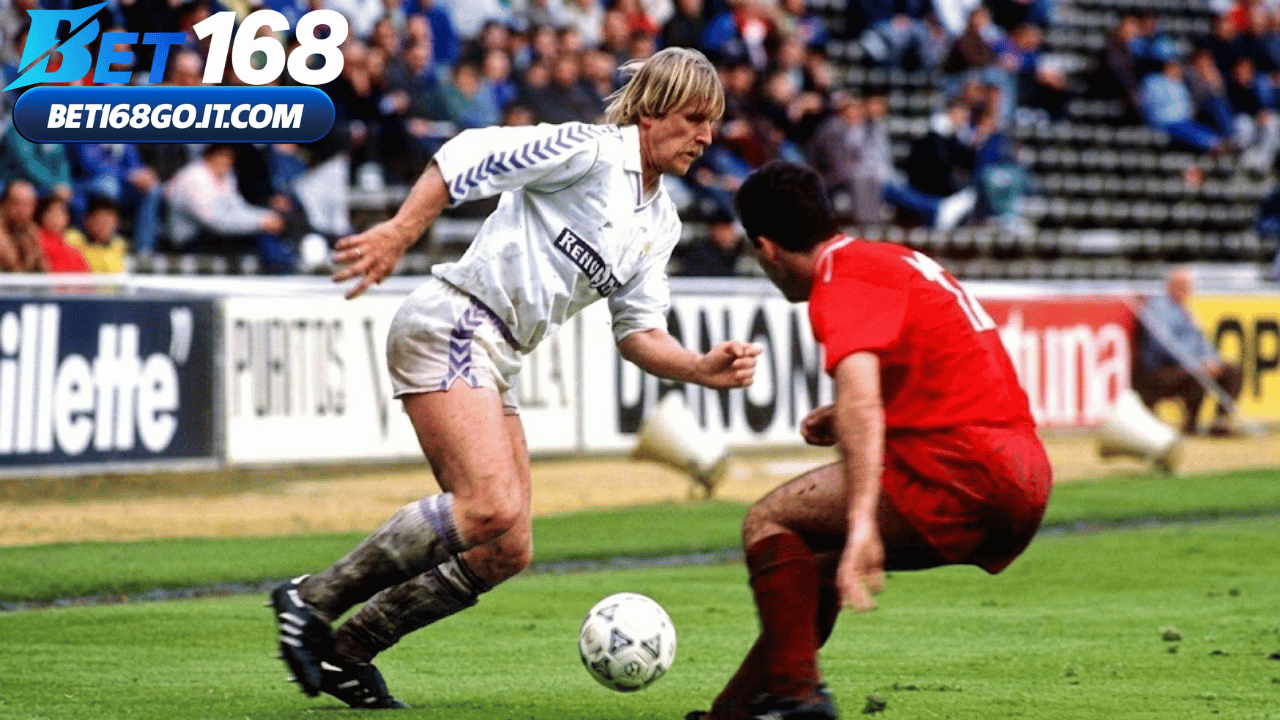

How does one balance the raw technical elegance of a German playmaker with the fiery temperament required to lead the world’s most demanding locker rooms? The career of Bernd Schuster remains a fascinating study in both individual brilliance and the complex politics of professional sports. When evaluating the impact of such a polarizing figure, many analysts look toward platforms like bet168 to understand the historical odds and statistical shifts that occurred during his era. His journey was never just about the goals or the assists but rather about a fundamental shift in how the deep-lying playmaker operated on the pitch. For those who study the intricate patterns of the game, his presence was as mathematically significant as a Dàn Đề 36 Số Bất Tử strategy in a complex system. He possessed a rare ability to visualize the entire field of play several steps ahead of his contemporaries, making him an indispensable asset for any manager willing to handle his strong personality.
The arrival of Schuster in Spain during the early 1980s signaled a new chapter for FC Barcelona. He brought northern European discipline mixed with a Mediterranean flair for the dramatic. One thing very few pay attention to is how his passing range forced defenders to abandon traditional marking schemes. While many contemporaries relied on short, safe passes, he was known for booming cross-field balls that could flip an attack in seconds. In addition, his physical presence allowed him to withstand the heavy challenges common in La Liga at the time. This unique combination of grit and grace ensured he remained at the pinnacle of the sport for nearly two decades.
The Tactical Revolution of the Bernd Schuster Era
How did the “blonde angel” dictate the tempo of matches against the most aggressive defenses in Europe? The tactical flexibility shown by Bernd Schuster allowed him to transition from a traditional number ten into a modern, deep-seated orchestrator. This evolution was a conscious decision to maximize his influence over the full ninety minutes. A significant portion of his success came from his understanding of space and timing, which allowed him to exploit gaps that others simply could not see. By dropping deeper, he could pick up the ball from defenders and initiate attacks before the opposition could organize their press.
His time at Real Madrid proved that his tactical intelligence was not limited to one specific system. He integrated into a side that valued attacking fluidity, providing the necessary structure to allow other stars to shine. Another key aspect was his proficiency in dead-ball situations. His free kicks were legendary for their accuracy and power, often providing the breakthrough in tightly contested matches. For those who appreciate the finer details of midfield play, watching his match tapes is like attending a masterclass in positional awareness and ball distribution.
Managing the Giants of the Spanish Capital
What happens when a legendary player returns to the dugout to lead the very clubs he once represented? The transition into management for Bernd Schuster was marked by the same uncompromising nature that defined his playing days. When he took the reins at Real Madrid, he inherited a squad under immense pressure to deliver both results and entertainment. His approach was direct and blunt, reflecting his German roots and high expectations for professional conduct. During his tenure, he successfully guided the team to a league title, proving that his tactical mind was just as sharp from the touchline as it was from the center circle.
His management style prioritized collective output over individual stardom, a difficult feat in a “Galactico” culture. One thing very few pay attention to is the way he utilized substitutes to change the rhythm of a game. He had an uncanny knack for identifying when a match was stagnating and making personnel changes to inject fresh energy. Beyond that, his press conferences were often as unpredictable as his long-range passing, frequently making headlines for his honest and sometimes controversial assessments of his team’s performance.
The Philosophy of Direct Leadership
How does a manager maintain authority in a room full of world-class athletes and massive egos? For Bernd Schuster, leadership was never about being the most liked person in the building. It was about establishing a clear tactical framework and demanding total commitment to that vision. He believed that if every player understood their specific role within the larger machine, the team would naturally find success. This philosophy often put him at odds with club directors and the media, but it also earned him the respect of players who valued clarity and professional competence.
Future-Proofing Your Practice in the Age of Digital-First Coaching
The way he adapted his coaching methods to suit different leagues showed a level of versatility that many former players lack. Whether working in Spain, Germany, or Turkey, he implemented a style that balanced defensive solidity with quick, incisive transitions. Another key aspect of his coaching was his focus on youth development, often giving opportunities to younger players with the right mental attitude. For those who followed his managerial journey, it was clear that he viewed the game as a constant puzzle that required both logic and intuition to solve.
The Enduring Legacy of the German Maestro
Why does the name of Bernd Schuster still resonate so strongly with football fans across generations? His legacy is built on the foundation of being one of the few players to cross the divide between Barcelona and Real Madrid while maintaining a high level of performance at both. This feat requires a level of mental toughness rarely seen in the modern game. His influence can be seen in the way modern midfielders are trained to be multifaceted, capable of both winning the ball and creating scoring chances. He was a precursor to the “regista” role that would become popular in later years.
A significant portion of his lasting impact comes from his refusal to conform to expectations. He was a rebel on and off the pitch, always willing to speak his mind and challenge the status quo. In addition, his technical achievements continue to serve as a benchmark for young German players. One thing very few pay attention to is how his career path opened doors for other central European players to seek success in the Spanish league. He proved that the technical demands of La Liga were perfectly suited for a player with his specific set of skills.
Where Strategy Meets Its Metrics

How can we compare the calculated risks of a football career to the structured systems found in other competitive fields? The life of Bernd Schuster was defined by high-stakes decisions, much like a player meticulously building a Dàn Đề 36 Số Bất Tử to ensure long-term stability. Every move he made, from changing clubs to shifting his tactical position, was a calculated step toward maintaining relevance at the highest level. This methodical approach to excellence allowed him to remain a dominant force for so long.
His ability to read the “odds” of a match allowed him to take risks that others would find reckless. Whether it was a sixty-yard pass or a daring tactical substitution, his actions were always backed by a deep understanding of the game’s internal logic. Another key aspect was his durability, both physically and mentally. For those who study the history of the sport, his trajectory offers valuable lessons in resilience and the importance of staying true to one’s professional principles regardless of external pressure.
Beyond the Horizon: Mapping the Next Phase
Reflecting on these achievements, it is clear that Bernd Schuster functioned as the premier tactical engine of his generation. His journey through the highest echelons of European football remains a testament to the power of individual vision and tactical discipline. He managed to bridge the gap between different footballing cultures, leaving an indelible mark on every club he represented. Much like the precision required in a Dàn Đề 36 Số Bất Tử, his career was a blend of meticulous planning and the courage to execute when the moment demanded it. He remains a figure of immense respect and occasional controversy, a true original in a sport that often favors conformity over character.
For those who wish to delve deeper into the statistics and historical performances that defined this era, there are many resources available to explore. Understanding the nuances of his playstyle can provide a greater appreciation for the tactical evolution of the modern game. Whether you are a fan of his former clubs or simply a student of football history, his story is one of constant growth and unwavering ambition. Analyze the extensive archives of European football right now and discover how these historical icons continue to influence the current generation of athletes. Sign up today to engage with a community that prioritizes the technical mastery and strategic depth of the world’s greatest game. Dàn Đề 36 Số Bất Tử.