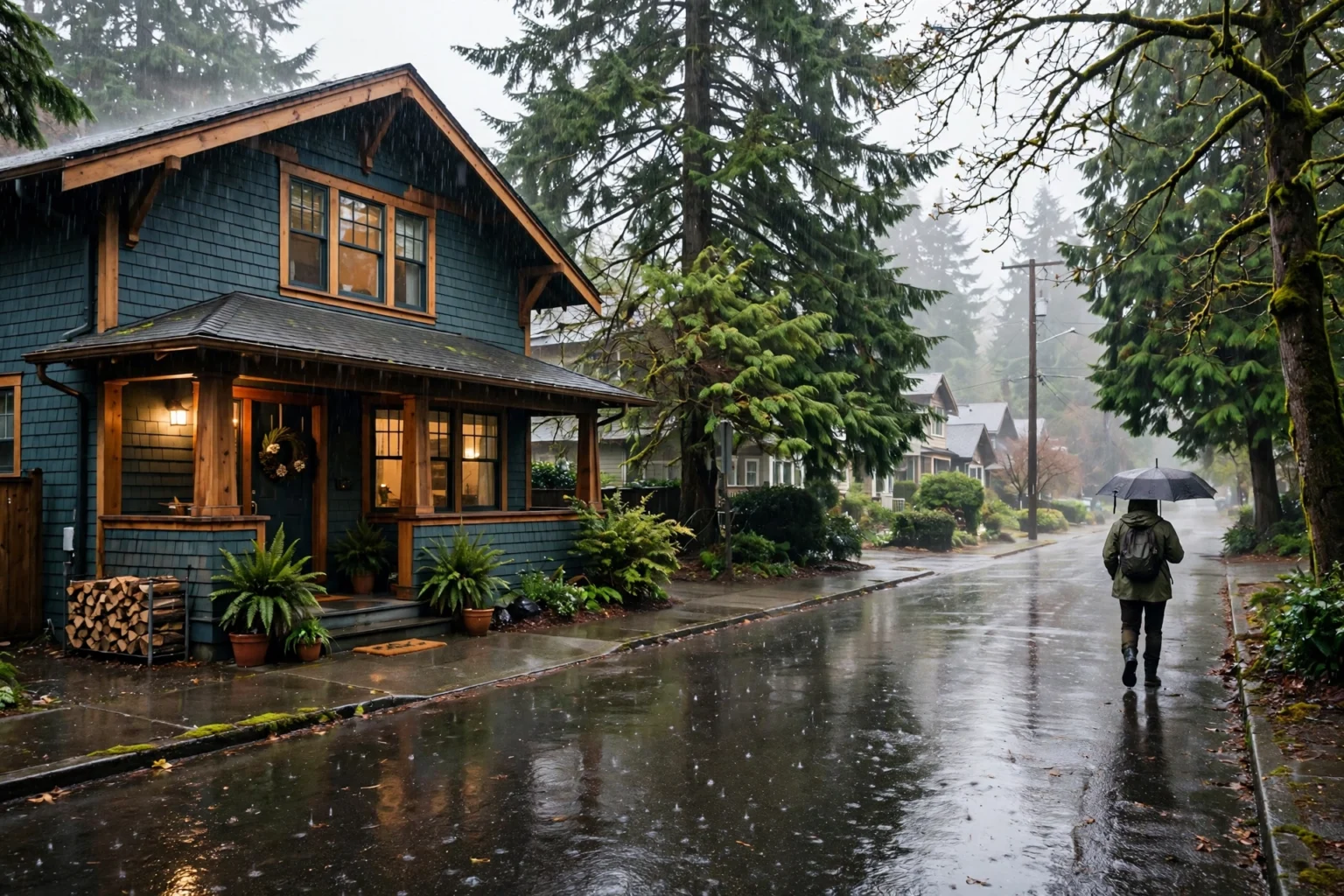

There is a point every autumn when the Pacific Northwest stops pretending summer might come back. The light fades earlier, the first serious fronts roll in off the Pacific, and the long rainy season settles in from Seattle and Portland to the smaller towns along the coast and the Cascades foothills. For people who live here, the rain is not an emergency in itself. It is a season, and like any season it rewards a little preparation. This guide covers the practical checks that matter most for your home, your car and your daily travel before the wettest months arrive.
Start at Home: Keep the Water Outside
Most rainy-season damage does not come from dramatic storms. It comes from small, ignored problems: a gutter full of fir needles, a downspout that empties against the foundation, or a roof valley quietly collecting debris. Before the heaviest rain, clear gutters and downspouts, check that water is carried well away from the house, and look for missing or lifted shingles while it is still safe to do so. Indoors, test your sump pump if you have one, and make sure anything stored in a basement or garage sits off the floor on shelves or pallets.
Flooding is the region’s most common rainy-season hazard, from swollen rivers to standing water on low roads. The National Weather Service’s flood safety guidance is worth reading before you need it: know whether your home or your commute crosses a flood-prone area, and remember that just a few inches of moving water can knock a person off their feet, while a foot of water can float a small car. The local rule is simple and saves lives every year: turn around, don’t drown.
Prepare for Power Cuts Before They Happen
Wind arriving with the rain brings down branches, and branches bring down power lines. A basic outage kit removes most of the stress: torches and spare batteries where you can find them in the dark, a power bank kept charged for phones, bottled water, and food that does not need cooking. If you rely on a medical device, talk to your utility about priority restoration lists and backup options now, not during an outage. Never run a generator indoors or in a garage; carbon monoxide kills quietly every storm season.
Read also on My Northwest News: How Travel Businesses Can Use Guest Articles to Share Better Sustainability Information
Your Car and Commute Need a Wet-Weather Check
Driving is where the rainy season touches most people’s daily lives. Worn wiper blades that smeared through summer become a genuine hazard in November rain, and tyres that were adequate on dry roads can aquaplane on standing water when the tread is low. Check both, along with lights, brakes and the demister, and build a small car kit: a warm layer, water, a torch, a phone cable and basic supplies in case a flooded road or a fallen tree turns a forty-minute commute into three hours.
Public transport users should expect delays on the wettest days and keep an alternative route in mind. Cyclists need lights earlier than they think, reflective gear, and extra braking distance on wet leaves, which are as slick as ice on downhill stretches. Everyone should slow down: the first rain after a dry spell lifts oil from the road surface and makes intersections unusually slippery.
Travel Across the Region in the Wet Months
If you are travelling through the Northwest this season, build slack into your plans. Mountain passes can shift from rain to snow within a single climb, ferry sailings are occasionally cancelled in high winds, and rural roads flood without much warning. Check pass conditions and river levels before you set out, keep the fuel tank or battery well above half, and tell someone your route if you are heading into areas with poor phone coverage.
The Short Version
None of this takes long. A weekend afternoon on the gutters and roof, an hour on the car, and a small kit by the door will carry most households comfortably through the season. The Pacific Northwest in the rain is still a beautiful place to live and travel; it simply asks that you meet it prepared.