
Self cleaning litter boxes promise a simple trade: you pay more up front, and your cat’s mess handles itself. In practice, the category covers a wide range of designs, and the differences between them matter far more than the marketing suggests. Some machines rake, some rotate, and some rely on weight sensors that trigger at the wrong moment. A model that works beautifully in a quiet one-cat home can be a noisy source of stress in a busy apartment with two cats. This guide is written for people who are ready to stop reading spec sheets and start understanding what actually matters day to day. We will walk through how automatic boxes sense and clean, which features genuinely reduce work, which ones add maintenance, and how to match a model to your cat’s habits and your household’s routine.
How Automatic Litter Boxes Actually Work
Every self cleaning design follows the same basic loop: detect that a cat has used the box, wait or start a timer, then move waste into a sealed compartment. The differences hide in how that loop is executed. Understanding the mechanics makes it far easier to judge whether a particular model will fit your home.
Raking and Rotating Designs
Raking models use a comb that sweeps through the litter and pushes solid waste toward a chute. Rotating models turn the entire drum so clumps roll into a separate bin. Raking tends to be gentler with clumping litter and easier to inspect, while rotating designs reduce direct handling. Both approaches leave soft or poorly clumping waste behind, which is why litter quality matters as much as the machine.
Sensors, Timers, and Safety
Weight and motion sensors decide when a cycle begins. A good system waits long enough for the clump to form and confirms the cat has left before moving anything. This is the feature to test hardest, because an overeager cycle can scare a cat away permanently. Look for a delayed start, a manual cycle button, and a clear indication of when the box is paused. Safety cutoffs matter too, particularly in homes with kittens or curious pets.
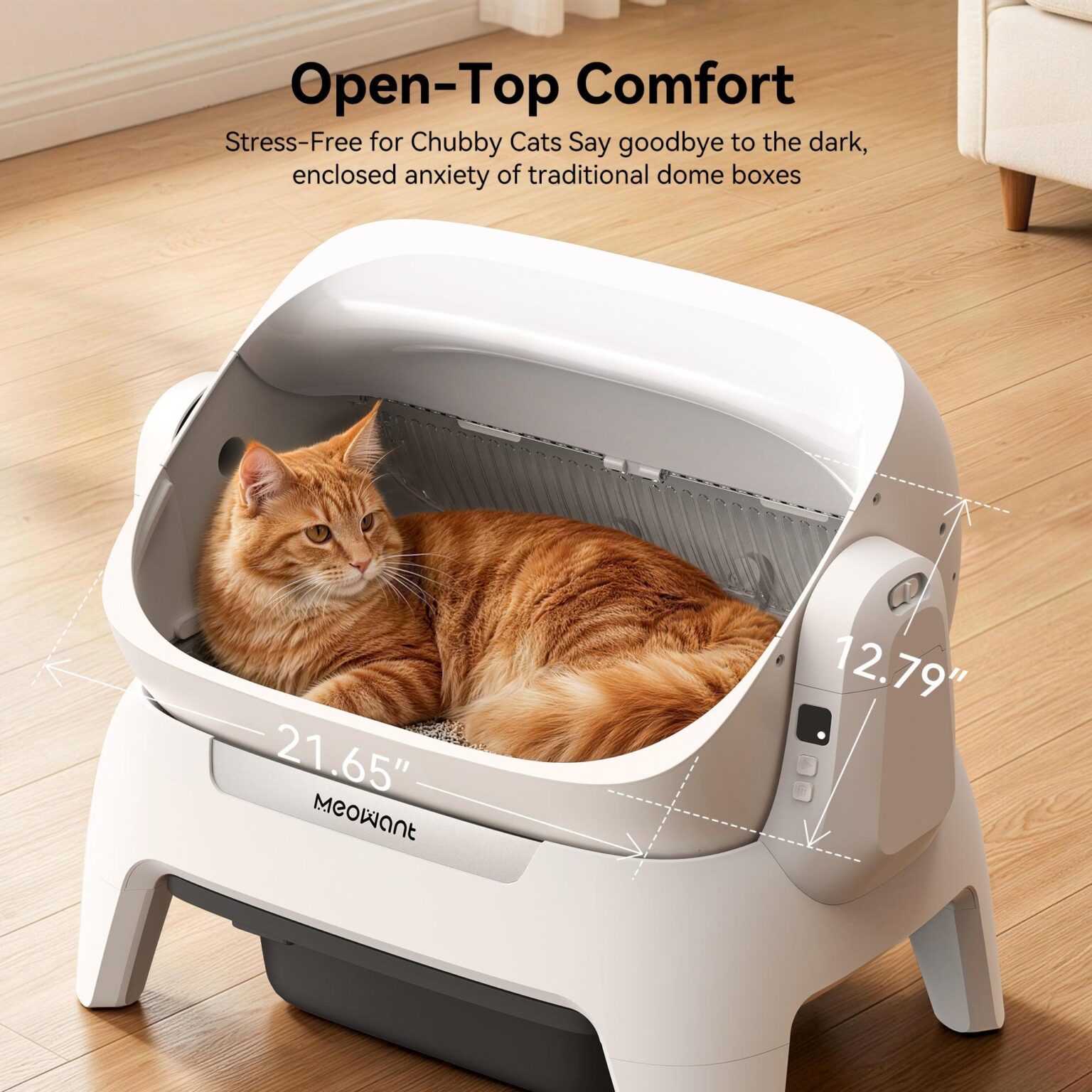
Open-top designs reduce the trapped air and confined space that make some cats hesitate. They also make it easier to see a problem before it becomes a mess, which is a practical advantage many buyers underestimate.
Features That Reduce Work vs. Features That Add It
An automatic box should remove chores, not rearrange them. The most useful features tend to be quiet and unglamorous, while the ones highlighted on the box often create extra steps.
Worth Paying For
Reliable detection with a sensible delay is the core feature. A sealed waste compartment that holds several days of clumps saves real time. A wide, stable base keeps the machine from shifting during cycles, and a simple litter level indicator helps you avoid overfilling, which is one of the most common causes of jams. Washable or replaceable liners also make deep cleaning far less unpleasant. The best self cleaning litter box is the one whose maintenance you will actually keep up with.
Often Not Worth It
App connectivity sounds helpful, but most owners check litter status with their eyes, not their phones. Elaborate odor-control attachments add parts that need cleaning and can fail quietly. Very enclosed hoods trap smells and discourage nervous cats. High-contrast displays and loud motors are minor annoyances for humans and major stressors for cats. If a feature adds a component you must scrub weekly, treat it as a cost rather than a benefit.
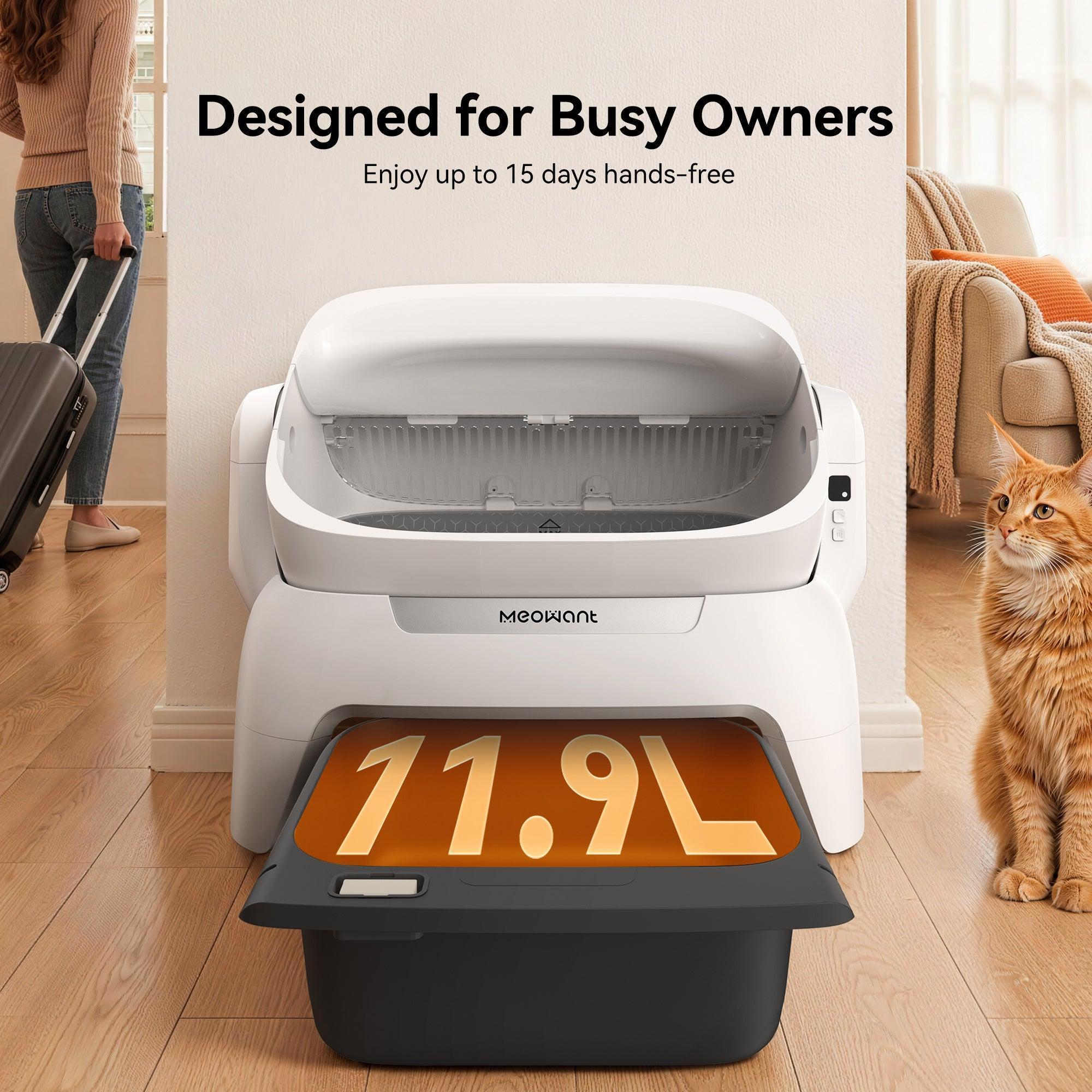
For busy households, the calculation is straightforward: a machine that cycles quietly, seals waste well, and is easy to empty by hand will outperform a feature-heavy model that demands frequent attention.
Matching the Machine to Your Cat and Your Schedule
The best model for one household can be a poor fit for another. Before comparing brands, compare your situation to the categories below.
Kittens, Seniors, and Shy Cats
Small or elderly cats need a low entry and a gentle cycle. Some automatic boxes are too tall or too loud for a cautious animal, and a bad first experience can lead to avoiding the box entirely. Introduce the machine alongside the old box for a week, running test cycles while your cat watches. If your cat is timid, an open design with a soft start is usually the safer choice.
Multi-Cat Homes
More cats means more cycles, faster bin fill, and more wear. In a multi-cat home, prioritize cycle reliability and bin capacity over clever features. Even an excellent automatic box cannot replace the general rule of one box per cat plus one, but a well-chosen machine can reduce the daily scooping load for the boxes you do keep.
Travel and Long Workdays
If you are away for long stretches, the appeal is obvious, but reliability becomes critical. Test the machine for a full week before relying on it during a trip, and keep a manual backup box in place. No automatic box should be the only option if you are gone overnight. Meowant’s self cleaning models are built around quiet cycles and simple waste removal, which suits owners who want automation that behaves predictably rather than impressively.
Common Mistakes That Undermine a Good Machine
Many complaints about automatic boxes trace back to setup rather than hardware. Using non-clumping or slow-clumping litter is the most frequent culprit, because the mechanism has nothing solid to move. Overfilling the drum causes jams; underfilling leaves waste stuck to the floor of the box. Placing the machine on uneven flooring can throw off sensors, and putting it in a humid, enclosed space encourages odor even when the sealed bin is working correctly.
Cleaning habits matter just as much. Empty the waste compartment on a schedule rather than when it smells, wiping the interior during each deep clean. Check the sensors for dust and litter buildup every few weeks. Owners who keep a simple maintenance calendar report far fewer surprises than those who wait for a warning light. If a cycle starts behaving oddly, the first step is usually a full clean and a litter change, not a replacement machine.
Litter choice deserves its own check. Fine clumping litters cycle cleanly but track more; coarse litters track less but can be harder for a rake to move. Test a small bag before committing to a large purchase, and avoid lightweight litters that cling to the machine’s interior. If the box has a specific litter recommendation, follow it during the first weeks so you can judge the machine fairly rather than blaming it for an incompatibility.
Also think about where the waste bin vents. Some designs hold odor well, but a bin stored in a warm laundry room will still release a smell when opened. Empty it on a fixed day rather than waiting for a cue, and wipe the bin interior when you clean the drum. That one habit does more for household odor than any deodorizing accessory.
Placement deserves the same care. A machine wedged into a narrow closet may cycle without issue but stays humid and warm, which shortens filter life and encourages odor. Give it a few inches of clearance on all sides, keep it off carpet if possible, and check that the cord is not pinched under a door. A small mat under the unit catches tracked litter and makes the weekly wipe-down quicker.
If two cats use one machine, watch the cycle timing during busy periods. Back-to-back visits can stack cycles and leave the drum mid-rotation when the next cat arrives. A short wait between cycles, or a machine that allows manual pause, avoids the awkward moment and reduces stress for both cats.
Buy for Reliability, Not for Hype
The strongest self cleaning litter box is not the one with the longest feature list. It is the one that detects reliably, cycles quietly, seals waste effectively, and stays easy to maintain week after week. Those qualities matter more than app controls or elaborate odor systems, especially in homes with shy cats or multiple animals. Start by understanding how the machine senses and cleans, then filter features by whether they remove work or add it, and finally match the design to your cat’s age and temperament. A measured choice made on those grounds will save you far more time and stress than chasing the most advertised option.