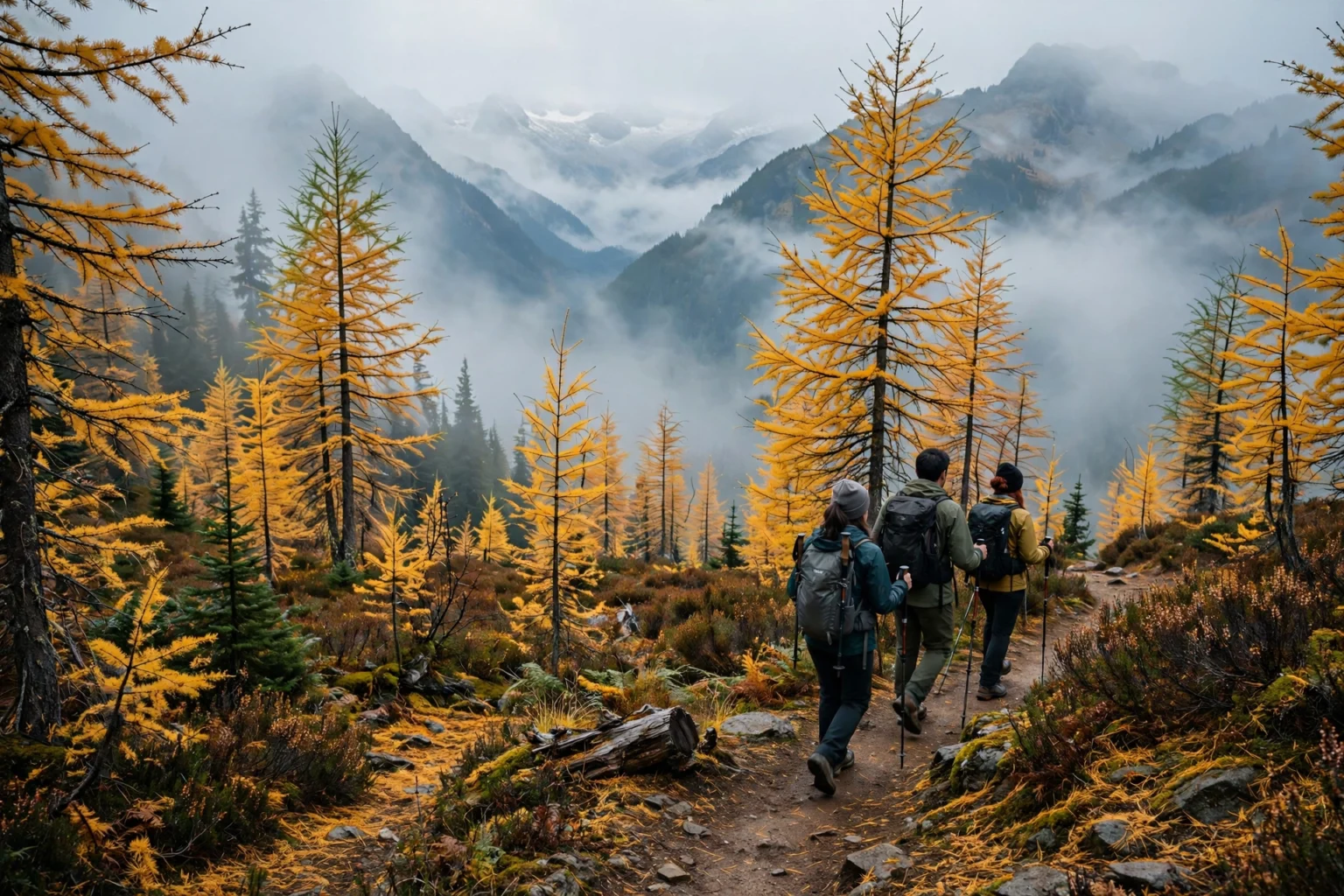

Ask Pacific Northwest hikers about their favourite season and many will surprise you. Not summer, with its crowded trailheads and booked-out permits, but autumn: the weeks when the larch trees turn gold in the high country, the air goes crisp, and the trails belong again to the people who love them most. If you have only ever hiked here between June and August, this is the season you have been missing, provided you prepare for its shorter days and changeable weather.
Why Autumn Trails Are Different
The transformation starts in the subalpine country of the North Cascades and the ranges east of the crest, where larches, a deciduous conifer, flare brilliant gold before dropping their needles. Lower down, maples and vine maples light up the river valleys in red and orange, and mushrooms push through the forest floor along the mossy trails of the Olympics and the Columbia River Gorge. Wildlife is on the move, salmon are running in the rivers, and on clear days the views run for a hundred miles in the washed, post-rain air.
Just as valuable is what autumn removes. The tour buses thin out, the dawn race for parking eases, and popular routes that felt like queues in August become peaceful again. Weekday hikers in particular can have famous viewpoints almost to themselves.
Where to Go
For larch colour, the trails around the North Cascades and the Enchantments region near Leavenworth are the classic choices, though permits and early starts still apply to the most famous routes. The Washington Trails Association’s trip reports are the region’s best real-time resource: recent reports tell you where the colour is peaking, whether the trail is muddy or icy, and when the larches have passed their best. In the Gorge, waterfall trails run full and dramatic after the first rains, while the rain-shadow trails of the San Juan Islands and the Olympic Peninsula’s east side often stay drier when the rest of the region is soaked.
Read also on My Northwest News: How Travel Businesses Can Use Guest Articles to Share Better Sustainability Information
Autumn Demands Extra Care
The same season that empties the trails also shortens them. Sunset arrives far earlier than in July, and a hike that ends in golden light can finish in genuine darkness if you linger. The National Park Service’s hiking safety advice is a sound checklist for any season, and autumn adds its own items to it. Carry a headtorch even for morning starts. Dress in layers and pack a waterproof shell: a clear, frosty trailhead can sit under sleet or rain two thousand feet higher, and hypothermia is a real risk in wet, windy conditions at temperatures well above freezing.
Footing changes too. Wet roots, mud and fallen leaves hide rocks and holes, and the first ice appears on shaded bridges and north-facing slopes weeks before most hikers expect it. Trekking poles earn their place in autumn. Rivers run higher after rain, so treat every crossing with fresh respect, and check hunting-season dates for the area you are visiting; wearing a bright colour in season is a simple precaution many local hikers follow.
Timing It Right
Larch colour usually peaks from late September into mid-October depending on elevation, while lowland colour runs later into the autumn. Watch trip reports, aim for the clear window after a front has passed when the air is at its cleanest, and do not be put off by a grey forecast at home; conditions in the mountains change by the hour, and some of the finest trail days of the year begin in drizzle.
The Season Locals Keep for Themselves
Autumn hiking in the Pacific Northwest is not a compromise version of summer. It is a different and, for many, better experience: quieter, more colourful and more atmospheric, on trails that feel wild again. Go prepared for the cold, the dark and the wet, and you will understand why locals guard the secret.