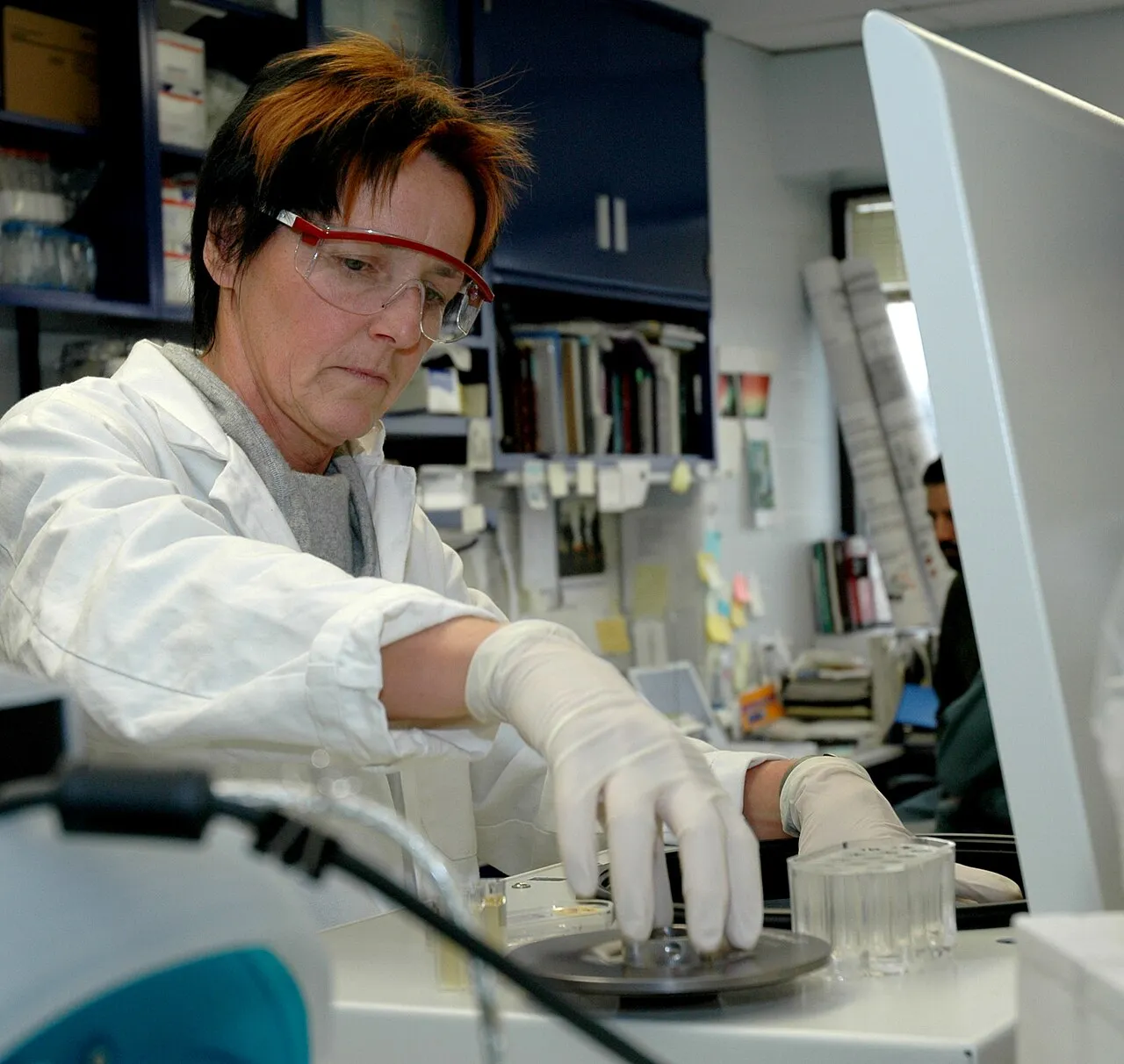

National budget fights can feel abstract in the Pacific Northwest, until they reach the systems our own health departments plug into every day. Health officials say the disruption of a $112 million federal epidemiology contract by DOGE — the administration’s cost-cutting department — has weakened part of the national disease-surveillance machinery that states like Washington and Oregon depend on.
State and local teams do heroic work, but they operate inside a federal web: shared data standards, laboratory networks and analysis coordinated through agencies such as the CDC. When a major federal contract is upended, the tremor travels outward to every state that relies on the picture it helps produce.
How Federal Surveillance Supports Our Region
When a suspicious cluster appears in the Northwest — an unusual flu pattern, a foodborne illness spanning counties — state epidemiologists investigate locally while federal systems provide the wider lens: Is the same pattern appearing elsewhere? Do the pathogen samples match a national database? Is this a local incident or the edge of something larger?
Contract-supported federal teams help supply that lens. They maintain the data exchanges, genomic comparisons and analytical surge capacity that no single state could justify building alone. Officials warning about the $112 million contract describe exactly those connective functions being disrupted, with knock-on delays for the states at the end of the line.
Why Timing Worries Health Officials
The disruption lands as measles cases climb nationally and the region prepares for respiratory virus season. Our recent coverage of measles guidance for Northwest families underlined how much local advice depends on trustworthy, current national data. Surveillance is the raw material of that guidance.
Officials’ central fear is delay compounding delay. A federal dataset that arrives a week late produces state assessments a week late, which produce public warnings a week late. In outbreak mathematics, a week is not a rounding error; it can be the difference between a contained cluster and a community-wide problem that closes schools and fills clinics.
Can States Backfill the Gap?
Wealthier states can hire some displaced specialists and expand their own analytics, and Northwest health leaders have experience improvising after federal turbulence. But backfilling has limits: states cannot recreate national data standards, cross-state comparisons or the deep baselines that make anomalies visible, and poorer states cannot backfill at all — which means outbreaks may be spotted latest exactly where defences are thinnest.
The likely outcome is a patchwork: strong states coping, national coherence suffering. For a region whose ports and airports connect it to the world, that coherence is not a luxury. It is the early-warning system for everything that arrives by plane and ship.
The Technology Is Not the Bottleneck
Regional health leaders say the national debate will ultimately be judged by a handful of very concrete measures. Modern surveillance has remarkable tools: genomic sequencing that fingerprints a pathogen within days, wastewater monitoring that detects community spread before clinics do, and models that forecast hospital demand weeks ahead. None of these tools, however, operates itself. Each depends on funded teams to collect samples, maintain instruments and interpret results in context.
That is why officials focus on the contract’s people rather than its paperwork. Sequencers can be mothballed and restarted; a dispersed team of specialists who understood a state’s data cannot. In surveillance, the workforce is the technology.
The contract fight will be settled in Washington, DC, but its effects will be measured in places like Seattle, Spokane and Portland — in how fast the next outbreak is recognised here. We will keep tracking the local implications. Start with our guide: Measles Reaches 4,410 US Cases: Guidance for Northwest Families.