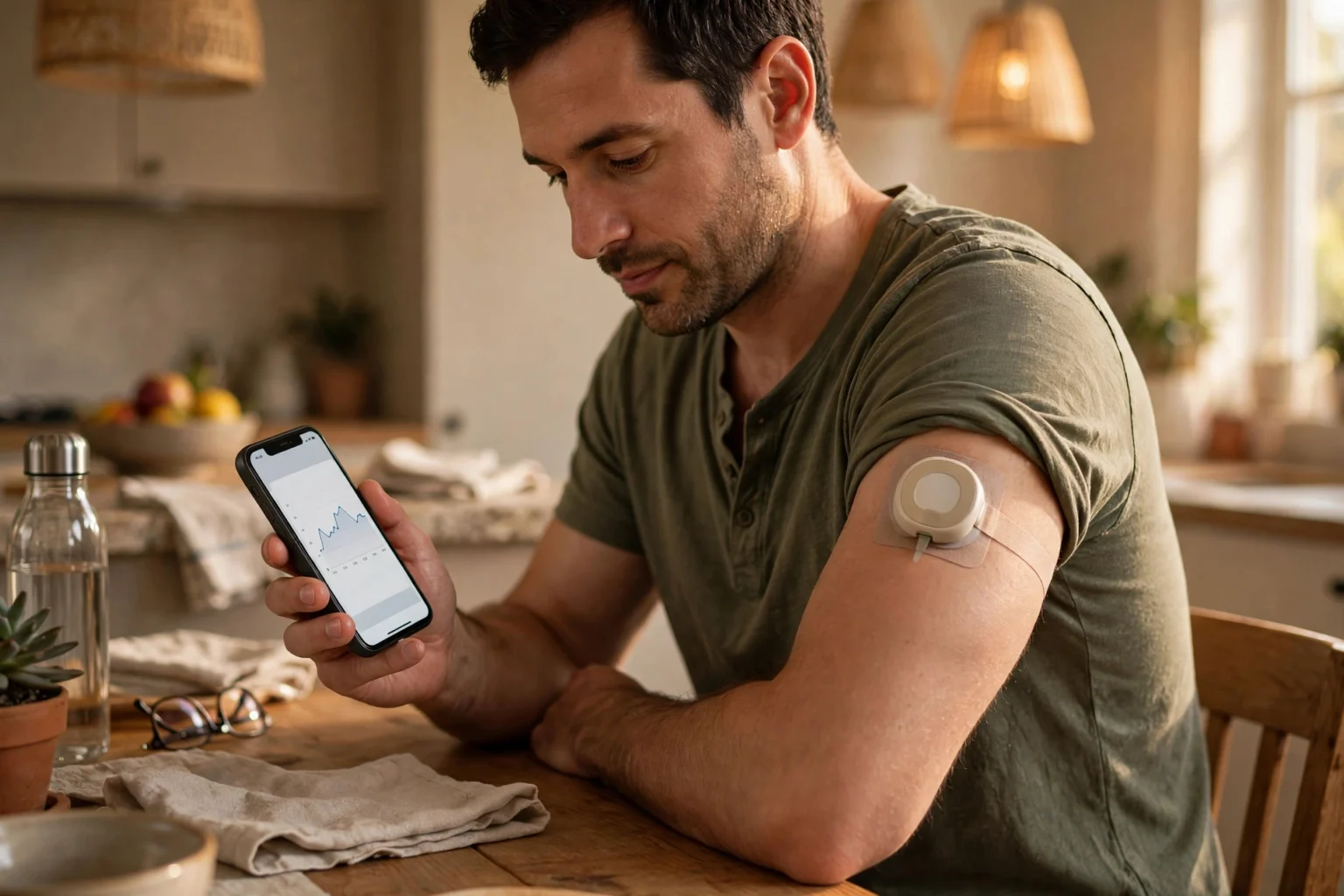

Adults with type 2 diabetes who do not use insulin could gain roughly five more hours a day with their blood sugar in the healthy target range by wearing a continuous glucose monitor, according to the largest clinical trial of its kind, published in the New England Journal of Medicine. The finding challenges the long-standing assumption that these wearable sensors are mainly useful for people on intensive insulin therapy.
Continuous glucose monitors, or CGMs, are small wearable devices that track glucose levels around the clock and send readings to a phone or receiver. Instead of a handful of finger-prick tests a day, users and their clinicians can see patterns: the spike after breakfast, the dip during an afternoon walk, and the slow drift overnight. That fuller picture appears to change behaviour in ways that add up to measurably better control.
What the trial actually found
Researchers reported that participants using a monitor spent approximately five more hours each day in their target blood sugar range than those managing their condition without one. Time in range has become an increasingly important measure in diabetes care because it captures daily stability, not just an average. A person can post a reasonable average while still swinging between highs and lows that leave them tired, foggy and at greater long-term risk.
Details of the study were summarised by the University of Colorado Anschutz Medical Campus, which highlighted the scale of the trial and the fact that it focused on a group often overlooked in technology studies: people with type 2 diabetes who are not using insulin. For those readers, the result is not about a gadget. It is about whether information, delivered at the right moment, helps people make slightly better decisions dozens of times a week.
Why feedback changes behaviour
Clinicians who work with CGM users describe a consistent learning curve. In the first weeks, people often discover that foods they considered harmless send their glucose sharply upward, while a short walk after a meal blunts that rise far more than they expected. Sleep, stress and illness leave visible traces too. Over time, those lessons become habits, and habits are what determine long-term blood sugar control far more than any single clinic visit.
That emphasis on everyday environment and routine is familiar to readers of our recent coverage of protecting indoor air when wildfire smoke drifts into the Pacific Northwest, where small, informed adjustments at home make a measurable difference to health. Diabetes management works in a similar way: the monitor does not treat anything by itself, but it tells you, promptly and personally, which adjustments are worth making.
Who stands to benefit — and the open questions
Type 2 diabetes affects tens of millions of Americans, and only a minority use insulin. If the benefits seen in this trial hold up in wider practice, the potential audience for CGMs is far larger than the group that currently receives them. That raises practical questions. Will insurers expand coverage for people not on insulin? Can clinics handle the volume of data and coaching that wider use would create? And will the improvements persist after the novelty wears off, a year or two into wearing a sensor every day?
Cost remains the most immediate barrier. Sensors are replaced every one to two weeks depending on the model, and out-of-pocket costs can discourage exactly the patients who might benefit most. Health policy specialists say evidence from large, well-run trials is what moves coverage decisions, which is why publication in a leading journal matters beyond the headline number. The Centers for Disease Control and Prevention continues to stress that technology works best alongside nutrition, activity, medication review and regular check-ups, not as a substitute for them.
What patients should do now
Anyone with type 2 diabetes who is curious about a monitor should raise it at their next appointment, particularly if their recent results have drifted upward or if finger-prick testing feels too sparse to guide decisions. Ask what target range your care team recommends for you personally, since goals differ with age, other conditions and medication. Ask, too, about training: the first sensor application and the first week of readings are much easier with guidance.
It also helps to go in with realistic expectations. Readings lag a few minutes behind blood levels, sensors occasionally need replacing early, and a stream of numbers can feel overwhelming at first. Many users find it helps to review patterns weekly rather than reacting to every fluctuation, a steadier approach we have also recommended when people track other fast-changing conditions at home, as in our coverage of preparing early for this season’s storms.
The broader significance of the trial is a shift in thinking. Diabetes technology has often been rationed to those with the most complex regimens, on the theory that they need it most. This evidence suggests the benefits of seeing your own data clearly may be much more widely shared. Five extra hours a day in a healthy range, compounded over months and years, is the kind of quiet improvement that prevents complications rather than merely recording them — and that is why researchers, clinicians and patients are all paying attention.