
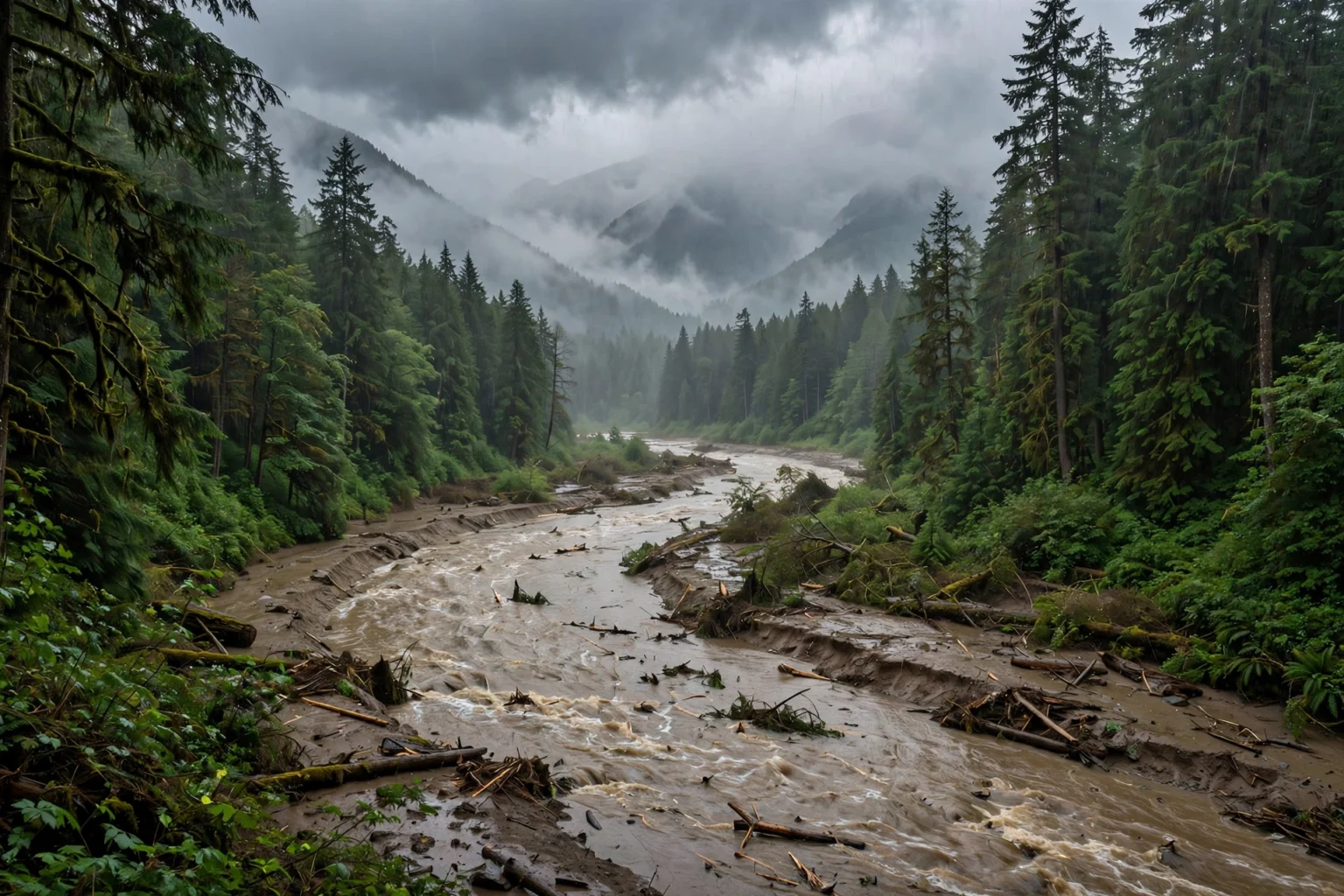

The first major atmospheric river of the season is lining up in the Pacific this week, and forecasters say the corridor of moisture aimed at the Northwest coast is arriving weeks earlier than the historical norm. For communities from the Olympic Peninsula to the Cascade foothills, the pattern is becoming familiar: long, warm plumes of tropical moisture that can drop a month’s worth of rain in a few days, swelling rivers that are still low from summer.
Atmospheric rivers are not storms in the traditional sense. They are narrow bands of concentrated water vapor, sometimes 300 miles wide and thousands of miles long, that transport enormous volumes of moisture from the tropics toward the mid-latitudes. When one makes landfall against the Coast Range or the Cascades, the rising air wrings the moisture out as rain — often at elevations where it would once have fallen as snow.
Why this season looks different
Meteorologists point to two compounding factors this year. First, ocean temperatures in the northeastern Pacific remain warmer than average, loading the atmosphere with extra moisture before a system ever reaches the coast. Second, the rain-snow line is creeping higher. Rain falling on early-season snowpack melts it rapidly, and the combined runoff is what turns a heavy rainstorm into a flood event for rivers like the Skagit, the Snoqualmie and the Chehalis.
“The storm itself is only half the story,” one regional forecaster noted this week. “It is the elevation of the snow line that decides whether we are talking about wet roads or closed highways and evacuated neighborhoods.” Readers following our ongoing coverage at MyNorthwestNews will recognize the pattern from last winter, when a similar setup flooded low-lying farmland in the Skagit Valley.
What counties are doing now
Emergency managers are not waiting for the water to rise. Several counties have pre-positioned sandbags and high-water vehicles, cleared storm drains in known trouble spots, and opened coordination calls with the National Weather Service office in Seattle. The National Weather Service has urged residents in flood-prone areas to review evacuation routes and keep a three-day kit ready, standard advice that officials say too many households still postpone until a warning is issued.
Utilities are also staging repair crews in advance, since saturated soils make trees far more likely to topple onto power lines once winds pick up. For commuters, transportation departments warn that the first big rain after a dry spell lifts oil from road surfaces, making the opening hours of a storm the most dangerous for drivers.
What residents should do this week
The practical checklist is unglamorous but effective. Clear gutters and the storm drain nearest your home. Charge phones and battery packs before the front arrives, not during the outage. Never drive through flooded roadways — as little as a foot of moving water can float a small car, and washouts can hide beneath apparently shallow water. If you rely on a sump pump, test it now, while the hardware store is still stocked.
It is also worth checking on neighbors, particularly older residents living alone in low-lying areas. In past Northwest floods, informal check-ins have repeatedly proven faster than official systems at spotting someone in trouble. Our recent regional coverage has more detail on which river basins local officials are watching most closely this season.
The longer view
Climate scientists caution against attributing any single storm to long-term change, but the trend in the region is well documented: the wet season is compressing, with a larger share of the year’s rain arriving in intense bursts separated by longer dry stretches. That pattern strains infrastructure designed for steadier rainfall — culverts, levees and storm systems sized for a climate that no longer quite exists.
For now, the advice from every agency is the same: treat this first atmospheric river as a rehearsal. The season is young, the ground is about to get saturated, and the storms that follow will fall on soil with nowhere left to put the water. Preparation done this week, while the sky is still quiet, is the cheapest insurance the Northwest offers.




